
Buffet vs Plated: What Works Better for Indian Weddings?
Indian weddings are vibrant celebrations filled with rich traditions, colorful attire, heartfelt rituals, and — without a doubt — unforgettable feasts. Food at Indian weddings isn’t just a formality; it’s a celebration of culture, community, and togetherness. But when it comes to serving that feast, couples and planners often find themselves debating between two popular service styles — buffet vs plated dining.
In this blog, we explore both styles in depth, compare them based on key factors, and help you decide what works best for your Indian wedding — whether it’s a grand multi-day celebration or an intimate gathering.
Why Food Service Style Matters at Indian Weddings
Food is one of the most talked-about elements at any Indian wedding. Guests expect variety, flavor, freshness, and a dining experience that complements the grandeur of the celebration.
Choosing the right service style matters because:
- It impacts guest satisfaction
- It affects your budget and logistics
- It shapes the overall flow of events
- It influences how elegantly your reception is perceived
Understanding the pros and cons of buffet and plated dining helps you plan better, avoid last-minute chaos, and create memorable experiences.
What Is Buffet Service?
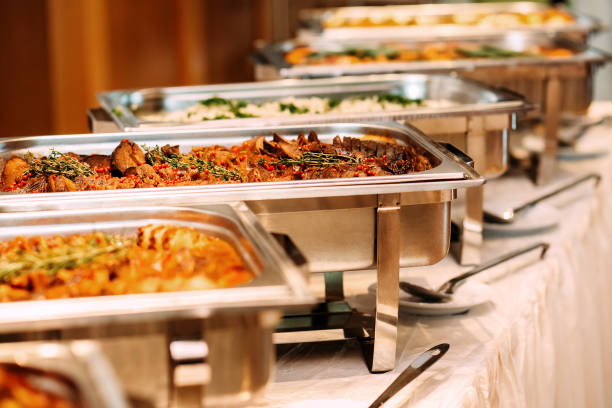
A buffet is a self-service style where food is displayed on long tables, and guests serve themselves. The spread typically includes appetizers, main courses, sides, breads, desserts, and beverages — all arranged in a way that allows guests to choose what they want and how much they want.
Common Features of Buffet at Indian Weddings
- Multiple food stations
- Wide variety of dishes
- Guests stand or sit after serving
- More casual, interactive vibe
- Frequently includes live cooking counters
Buffets are ideal for weddings where variety, choice, and guest autonomy are priorities.
What Is Plated Service?
In plated service, guests are served predetermined meals at their tables. Each guest’s plate is served by waitstaff, usually in courses, such as starters, main course, and dessert.
Common Features of Plated Dining
- Fixed menu per guest
- Food served in courses
- Elegant and formal ambiance
- Minimal guest movement during dinner
Plated service is often chosen for upscale weddings or formal events where service precision and presentation matter.
Head to Head: Buffet vs Plated for Indian Weddings
Let’s break down how buffet and plated service compare across the key aspects that matter most to couples planning their weddings.
1. Guest Experience & Satisfaction
Buffet
- Pros: Guests love variety and choice. They can sample multiple dishes, avoid items they dislike, and return for seconds.
- Cons: Queueing can be frustrating, especially for large weddings if not properly organized.
Plated
- Pros: Seamless, relaxed dining without queues. Guests are served fresh food at their table.
- Cons: Limited choice — guests must pick from a predetermined menu ahead of time.
Verdict: If your priority is guest choice and flexibility, buffet wins. However, if you want an orderly and sit-down dining experience, plated service offers a premium feel.
2. Menu Customization & Dietary Needs
Buffet
- Offers more flexibility for guests with dietary restrictions (vegetarian, vegan, gluten-free).
- Multiple stations allow labeling, helping guests identify preferred dishes.
Plated
- Requires detailed planning to incorporate dietary preferences.
- Special requests must be communicated in advance.
Verdict: Buffets excel in inclusivity and variety, giving guests more control over what they eat.
3. Presentation & Ambiance
Buffet
- Encourages interaction and movement.
- Can look spectacular with themed décor, live counters, and decorative chafing dishes.
- However, it can feel less formal compared to plated meals.
Plated
- Feels more elegant and refined — perfect for evening receptions or formal sit-down dinners.
- Table settings, plated presentation, and courses enhance sophistication.
Verdict: Plated service generally creates a more luxurious and elegant dining environment.
4. Logistics and Flow of Event
Buffet
- Requires careful placement of stations to prevent crowding.
- Needs more space and strategic layout.
- Guests may take longer to finish, affecting event timeline.
Plated
- Keeps guests seated and ensures a smoother flow of events.
- Timing is easier to coordinate (especially if speeches or performances are planned between courses).
Verdict: Plated dining offers better control over event flow, while buffets need smart staging and coordination.
5. Cost Considerations
Buffet
- Often more cost-effective for large guest lists.
- Economies of scale apply — especially when negotiating with caterers for multiple dishes.
Plated
- Can be more expensive due to service staff, plating, and sequential course timing.
- Requires more servers per table.
Verdict: For tight budgets or large weddings (300+ guests), buffet usually offers better value.
6. Speed and Efficiency
Buffet
- Guests serve themselves — the dining pace is determined by them.
- Risk of bottlenecks during peak serving times.
Plated
- Guests eat as the meal is served, ensuring everyone dines simultaneously.
- Faster in terms of coordinating service completion.
Verdict: Plated service controls timing better and keeps the schedule flowing.
Indian Wedding Specifics: What Works Best?
Indian weddings are unique — they often involve multiple ceremonies (mehendi, sangeet, reception), long hours, and diverse menus spanning regions and cultures.
Here’s how each service style fits specific Indian wedding scenarios:
Buffet Works Best For
✔ Multi-function weddings (when food stations can be themed for different events)
✔ Big guest lists exceeding 200-300 people
✔ Casual daytime receptions or outdoor weddings
✔ Guests from diverse backgrounds who prefer choice
Example: A Punjabi wedding with a mix of paranthas, butter chicken, tandoori counters, chaat corners, and dessert stations.
Plated Works Best For
✔ Formal evening receptions
✔ Wedding dinners with VIP guests
✔ Destination weddings with elegant venues
✔ Small, curated guest lists
Example: A luxury destination wedding in Rajasthan or Goa with pre-selected courses reflecting fine dining.
Hybrid Approach – Best of Both Worlds
Many modern Indian weddings now adopt a hybrid service style:
✨ Plated Starters + Buffet Main Course
✨ Buffet Appetizers + Plated Main Course & Dessert
✨ Live Stations + Plated Courses
This blends flexibility with elegance:
- Guests enjoy choice at appetizers.
- Main course served efficiently.
- Dessert plated for presentation.
A hybrid approach gives couples the best balance of variety, timing, and experience.
Practical Tips for Choosing Between Buffet & Plated
Here are actionable tips to help you decide:
1. Estimate Guest Count First
Smaller weddings (50-150) work well with plated service. Larger weddings lean toward buffets.
2. Know Your Menu
Complex regional menus with many items are easier to present as buffets.
3. Consider Your Venue
Outdoor venues and lawns often suit buffets better. Ballrooms and banquet halls complement plated service.
4. Talk to Your Caterer
Experienced caterers can suggest smart solutions — like double buffet lines, timed plated service, or interactive stations.
5. Guest Demographics
Elderly guests may prefer seated plated meals. Young crowds may enjoy buffet variety.
Case Study: What Indian Couples Are Choosing in 2026
Today’s Indian weddings are increasingly experiential. Couples want their guests to indulge, socialize, and savor every moment.
🔹 Destination Weddings: Often plated or hybrid service
🔹 Luxury Weddings: Plated with elaborate courses
🔹 Traditional Big Weddings: Buffets with themed stations
🔹 Evening Receptions: Elegant plated service with premium desserts
Final Verdict: Buffet or Plated — Which Is Better?
There’s no absolute answer — both styles have strong merits. The best choice depends on:
✔ Your budget
✔ Guest count
✔ Venue & setup
✔ Event schedule
✔ Dining experience you want to create
If choice, variety, and flexibility rank higher — go with a buffet.
If elegance, control, and a seamless service flow matter more — choose plated dining.
And if you want the perfect blend, the hybrid approach is the rising trend that gives you both sophistication and diversity.
Conclusion
Food is the heart of Indian wedding celebrations. Whether buffet or plated, the goal is to delight your guests and leave them with memories of delicious flavors and joyful moments.
Take time to plan your menu, coordinate with your caterer, and choose a service style that aligns with your wedding vision. With thoughtful decisions, your feast will be as unforgettable as your big day.
Add Comment